


Sewerage in Auckland: What it is, what goes wrong, and what to do next
Sewerage is one of those things you never think about until it smells, gurgles, or comes back up.
Then it becomes the only thing you can think about.
If you are in Auckland and you are dealing with sewerage issues at home or on a commercial site, you want two things.
You want the mess to stop.
You want to know why it happened, so it does not keep repeating.
AllGo Plumbing handles sewerage and drainage work Auckland-wide. That means you can call, explain what you are seeing, and get a straight plan of action.
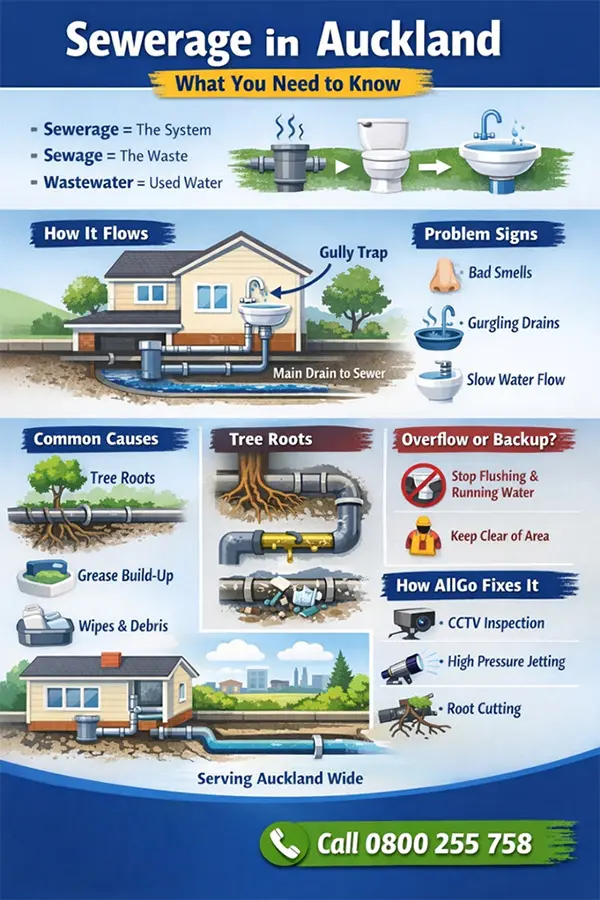
How sewerage gets collected and transported on your property
Your property has its own mini network before anything reaches the public side.
Waste leaves fixtures through waste pipes.
Those pipes join into an underground drain.
That drain runs towards the boundary connection.
Along the way, there are “receiving points” you can often see.
- Gully traps outside.
- Inspection openings or access points.
- Floor wastes in bathrooms, laundries, plant rooms, and commercial wet areas.
These points exist to keep flow moving and give access for clearing and inspection.
If one of them overflows, it is usually telling you the line cannot carry wastewater away fast enough.
Question to ask yourself
Do multiple fixtures struggle at once, or is it only one sink or one shower?
The signs your sewerage system needs attention
Sewerage issues usually whisper first.
Then they shout.
| What you notice | What it often means | What you can do now | What AllGo Plumbing can do |
|---|---|---|---|
| Sewer smell in a bathroom or laundry | Dry floor waste trap, build up in waste pipe, or a partial blockage | Run a little water into the floor waste, stop using the worst drain if smell worsens | Check traps and vents, clear local restrictions, inspect if it keeps coming back |
| Smell outside near the gully trap | Main drain restriction, gully holding waste, or a damaged joint | Keep the area clear, stop sending fats and scraps down sinks | Jet clean the line, CCTV inspection to find roots, cracks, or sags |
| Gurgling when you flush or run taps | Air cannot move freely, often due to a restriction starting | Note which fixtures gurgle and when | Find the restriction, clear it, check for venting or root issues |
| Slow draining in one fixture only | Local blockage in that fixture line | Avoid chemicals, stop using that fixture heavily | Unblock the local line, clean it properly to reduce repeats |
| Slow draining in more than one fixture | Main drain starting to block, grease build up, roots, or pipe damage | Stop running big loads of water, check the gully trap if safe | Jetting, CCTV inspection, root cutting, repairs if needed |
| Toilet water rises higher than normal before dropping | Partial restriction in toilet line or main drain | Do not keep flushing, stop other water use if it worsens | Clear the line, inspect if it is a repeat issue |
| Toilet backs up or overflows | Main drain blocked or near blocked, urgent | Stop flushing and water use, keep people away, take photos if safe | Emergency unblock, jetting, CCTV, advise on repair or prevention |
| Water around or overflowing from the gully trap | Main drain cannot carry wastewater away, urgent | Stop water use inside, keep kids and pets away | Clear and clean the main line, inspect to confirm cause and condition |
| Problems spike after heavy rain | Saturated ground shifts pipes, extra stress on older lines, existing restriction exposed | Track when it happens and what overflows first | CCTV to locate low spots or damage, jetting and repairs if needed |
| Repeat blockages every few months | Roots, grease, damaged pipe, or a sag that keeps collecting sludge | Keep a simple log of dates and which fixtures show it | CCTV to pinpoint cause, root cutting, targeted repair or relining options |
Common warning signs
- Sewer smells inside, especially bathrooms and laundries.
- Smells outside near the gully trap.
- Gurgling when you flush or run taps.
- Slow drainage in more than one fixture.
- Toilet water rising higher than normal before it drops.
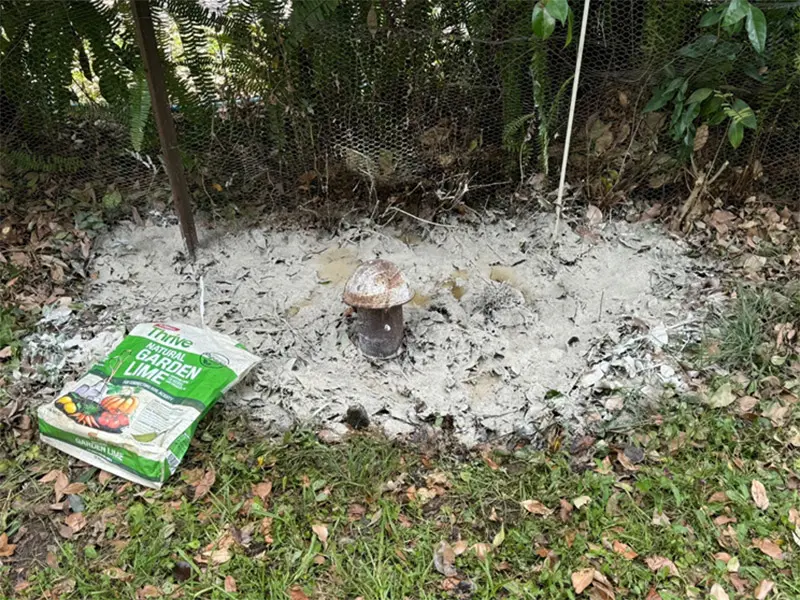
- Water sitting around the gully trap, or the gully overflowing.
A simple pattern test
- One fixture plays up, others fine
This often points to a local blockage - Several fixtures play up at once
This often points to the main drain, roots, grease build up, or pipe damage
If you manage a commercial site, treat early signs seriously.
Smell complaints and slow flow can turn into closed bathrooms and lost trading time fast.
If you have a sewerage overflow or backup, do this first
This is the bit where people make it worse without meaning to.
If wastewater is coming up, the system is effectively full.
Start by stopping the flow.
Do this straight away: -
- Stop flushing toilets.
- Stop running taps, showers, dishwasher, and washing machine.
- Keep people and pets away from the affected area.
- Open windows if odour builds up.
- Take photos if safe, especially for property managers or landlords.
Then call a drain specialist such as AllGo Plumbing & Drainage.
Cleaning without fixing the cause just repeats the mess.
What to tell the plumber so they can move faster:-
- Which fixtures show the problem?
- Whether the gully trap outside overflowed?
- When it started and if it is getting worse?
- Whether it is a repeat issue?
- Any recent heavy rain, building work, or known tree root trouble?
AllGo Plumbing offers Auckland-wide plumbing and drainage support, including urgent callouts.
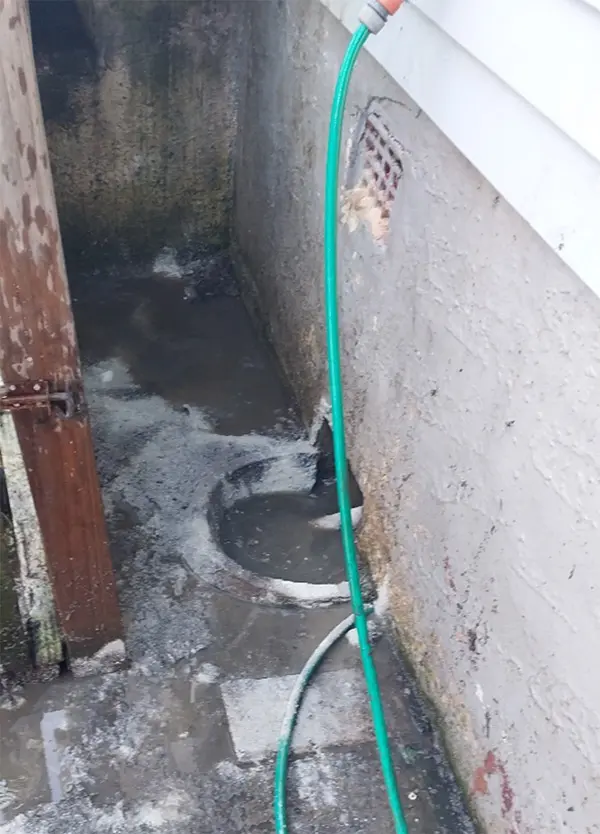
Why sewerage problems happen in Auckland?
Most sewerage problems come down to restriction, damage, or both.
The usual suspects: -
- Tree roots entering joints or cracks and snagging solids.
- Grease buildup in kitchen lines.
- Wipes and hygiene products that do not break down.
- Sludge builds up in low points.
- Cracked, shifted, or collapsed pipe sections.
- Heavy rain exposing a line that was already struggling.
On commercial sites, there is often an extra layer.
If your business sends liquid waste to the wastewater network, Watercare treats that as trade waste, and some businesses need a trade waste agreement depending on risk and discharge type. Ask our plumbers about this when we chat.
Question to ask yourself
Is the issue tied to toilets, kitchens, or does it happen no matter what you run?
How AllGo Plumbing fixes sewerage issues Auckland-wide
When sewerage goes wrong, you want flow restored and the cause confirmed.
A practical approach looks like this:-
- Confirm if it is a local line problem or the main drain.
- Clear and clean the line properly.
- Use CCTV inspection when the symptoms suggest repeat causes or pipe damage.
- Recommend repairs only when the pipe itself cannot do the job anymore.
Tools that often solve sewerage issues properly:-
- Drain unblocking for simple restrictions.
- High-pressure water jetting for grease and sludge buildup.
- Root cutting when roots snag solids.
- CCTV drain inspection to locate cracks, sags, breaks, and displaced joints.
- Repairs, replacement, or relining when cleaning will not hold.
AllGo Plumbing’s drainage service includes wastewater drainage and commercial drainage across Auckland.
What should you expect at the end of the job?
- A clear explanation of what caused it.
- Evidence when CCTV is used, like images or footage.
- A simple prevention plan that fits your site use.
Costs, responsibility, and how you avoid the next callout
People want cost clarity. Fair.
Drain work cost usually depends on what the job needs, not the label on the problem.
What often changes cost?
- Access to the line and where the blockage sits.
- Depth and whether it runs under concrete or landscaping.
- Whether jetting is needed or a simple unblock will do it.
- Whether CCTV inspection is needed to find the cause.
- Pipe condition, like cracks, sags, or root entry points.
- Shared drains, like units or shared driveways.
Prevention that actually works.
For homes:-
- Keep fats and oils out of drains.
- Keep wipes out of toilets, even “flushable” ones.
- Use strainers where it makes sense.
- Keep the gully trap area clear of leaves and debris.
For businesses:-
- Set a cleaning routine for high-use lines.
- Sort grease management early if you have a kitchen.
- Act when staff report smell or slow flow, not days later.
- Keep simple records of repeat issues and callouts.
Question to ask yourself
Do you want a quick drainage clear today, or do you want to stop the same line from blocking again in a few months?
FAQs about sewerage in Auckland
Sewerage is the system of pipes and drains that carries wastewater and sewage away from your property.
Talk to AllGo Plumbing about sewerage problems
If something smells off, drains are gurgling, or you have an overflow, get it checked before it turns into a bigger clean-up.